Technology News : Do you know?? Here it is 5 Plastic Decomposition Microorganisms
 |
| Source : www.express.co.uk |
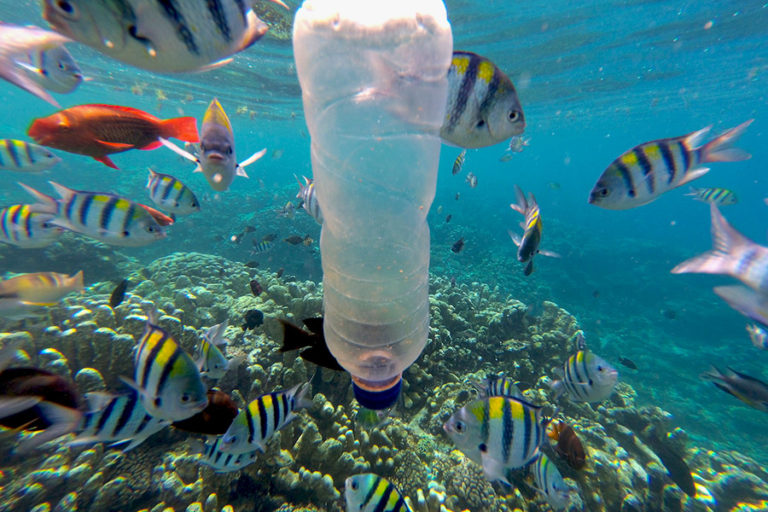
Plastics are synthetic polymers made from petroleum (non-renewable) so that it is difficult to be degraded by microorganisms. Plastic waste takes 200 to 1000 years to decompose. Indonesia has become the second largest polluter of plastic waste into the global ocean after China. Every year around 3 million tons of Indonesian plastic waste enters the ocean.
Plastic waste results in a decrease in the quality of the environment both on land and in waters. Disposal of plastic waste directly to the soil results in a decrease in fertility and damages the ecosystem of the soil that is exposed to harmful chemicals in plastic.
 |
| Source : www.mongabay.co.id |
The government program has indeed been encouraged, such as "Plastic waste education program for children", but all of them cannot overcome the problems that exist in Indonesia and even the world. World scientists are currently researching and developing technology to overcome the problem of world plastic waste explosion. Here are 5 microorganisms that can become plastic waste decomposers:
1. Ideonella sakaiensis
Now researchers from Japan have managed to find bacteria that can break down plastic made from PET. The research team was led by Dr. Kohei Oda from the Kyoto Institute of Technology and Dr. Kenji Miyamoto from Keio University. They gave the bacteria the name Ideonella sakaiensis. In this study, they used a sample of 250 pieces of low quality PET plastic. Then all of these samples are screened to determined whether there is a bacterium whose growth depends on the availability PET plastic layers. It turns out that this type of bacteria does exist.
 |
| Source : www.sci-news.com |
2. Pseudomonas spp.
Pseudomonas generally has no hydrolytic enzymes that are important in degrading polymers into monomers, but these bacteria have an inducible operon system that is capable of producing certain enzymes in the metabolic process of unusual sources of carbon.

3. Bacillus spp.
This bacterium, which is well-known as the bacteria that causes poisoning, was able to decompose the PE type up to 30%. This bacterium is also able to decompose the natural type poly lactic acid (PLA). Bacillus cereus, Bacillus brevis, Bacillus amylolyticus, and Bacillus subtilis are Bacillus types that can decompose plastic.
4. Aspergillus spp.
Aspergillus is a type of fungus microorganism. This microorganism can decompose polyethylene (PE) plastics up to 36%. Same as Pseudomonas fungi can decompose (PP) and (PVC). The types of Aspergillus that can decompose plastic are Aspergillus flavus, Aspergillus niger, Aspergillus glaucus, Aspergillus oryzae, and Aspergillus versicolor.
Pseudomonas generally has no hydrolytic enzymes that are important in degrading polymers into monomers, but these bacteria have an inducible operon system that is capable of producing certain enzymes in the metabolic process of unusual sources of carbon.

This large amount of bacteria found in water and dirty mud can decompose polyethylene (PE) plastics up to 50.5%. This bacterium can also decipher polyvinyl chloride (PVC) and polypropylene (PP) plastics. Pseudomonas aeruginosa, Pseudomonas putida, Pseudomonas chloraphis, and Pseudomonas fluorescens are examples of Pseudomonas bacteria that can decompose plastic (IDN Times, 2019).
3. Bacillus spp.
This bacterium, which is well-known as the bacteria that causes poisoning, was able to decompose the PE type up to 30%. This bacterium is also able to decompose the natural type poly lactic acid (PLA). Bacillus cereus, Bacillus brevis, Bacillus amylolyticus, and Bacillus subtilis are Bacillus types that can decompose plastic.
 |
| Source : www.ascent2health.com |
Bacillus spp. classified into the class of heterotrophic bacteria, ie protists are unicellular, belonging to the class of reducer microorganisms or commonly referred to as decomposers. Most marine bacteria included in the group of bacteria are heterotrophic and saprophytic (Rheinheimer, 1980).
Aspergillus is a type of fungus microorganism. This microorganism can decompose polyethylene (PE) plastics up to 36%. Same as Pseudomonas fungi can decompose (PP) and (PVC). The types of Aspergillus that can decompose plastic are Aspergillus flavus, Aspergillus niger, Aspergillus glaucus, Aspergillus oryzae, and Aspergillus versicolor.
 |
| Source : www.mycology.adelaide.edu.au |
Molds of Aspergillus spp. can be found in various types of substrates, including soil, fruit leaves, and seeds, which are the main ingredients in the manufacture of animal feed products from agricultural commodities (Sukmawati & Miarsyah , 2017).
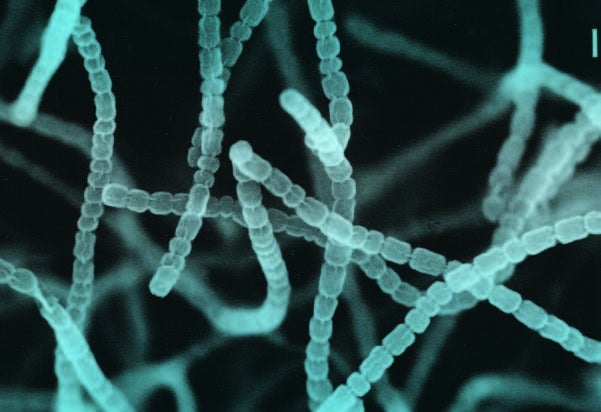
5. Streptomyces spp.
Aside from being the main ingredient in the antibiotic drug streptomycin and chloramphenicol, this bacterium can also decompose PE-type plastics up to 46.16%. These bacteria can also break down natural PHB plastic. The type of Streptomyces that can decipher plastic is Streptomyces viridosporus T7A, Streptomyces bangladeshensis, and Streptomyces thermoviolaceus.
 |
| Source : www.whyy.org |
These are the five groups of microbes that can decompose plastic waste. Are you interested or not, for researching these microbes for a cleaner Earth? In order for life to be peaceful, the ecosystem is maintained, the life cycle is not disturbed, and makes nature more beautiful. Let's examine ...
Belum ada Komentar untuk "Technology News : Do you know?? Here it is 5 Plastic Decomposition Microorganisms"
Posting Komentar